




This usually comes up once someone looks a bit deeper into THCp. In the beginning, it feels just like any other hemp-derived cannabinoid. Soon after, words like “lab-made” or “conversion” pop up. That’s when things start to feel unclear.
The reality is simple. THCp occurs naturally in cannabis, but nearly all THCp products available today are produced through conversion. That doesn’t make it fake. It does mean it isn’t extracted directly from flowers the way CBD is.
Understanding that middle ground matters.
Is THCp Synthetic? (Quick Answer)
THCp is naturally found in cannabis but in very low quantities. Extraction doesn’t work. That’s why commercial THCp is usually created by converting CBD from hemp. It is plant-derived and processed, not fully synthetic.
What “Natural” Really Means With THCp
Is THCp natural? People ask this question without thinking much about it. They simply want to find out whether it’s plant-based or not.
THCp sits in between.
Here’s the straightforward breakdown:
- THCp exists naturally in cannabis
- It appears only in trace amounts
- It cannot be extracted directly from flower at scale
- Commercial THCp comes from hemp-extracted CBD
- Quality is all about purification, cleanup, and lab testing
That’s why the best brands describe THCp as hemp-derived, not synthetic.
THCp Is Natural, but It’s Not Extracted the Way People Expect
THCp has been identified in the cannabis plant through research. That part isn’t debated.
What trips people up is how rare it is.
The amount of THCp found naturally in flowers is so small that traditional extraction methods don’t work. Even processing large amounts of plant material wouldn’t produce enough THCp to use in products.
That’s why commercial THCp doesn’t come straight from harvested flowers.
How THCp Is Made From Hemp-Derived CBD
Most THCp products start with CBD sourced from federally legal hemp.
That CBD then goes through a controlled chemical conversion. During this process, the molecular structure is adjusted so it becomes THCp instead.
This happens in a lab, which is why the word synthetic gets used so often. But the starting material is still plant-based, and the cannabinoid being created already exists naturally.
That distinction matters.
THCp isn’t created from nothing. It’s transformed from something that already comes from hemp.
Why Some People Report Very Long or Overwhelming Experiences
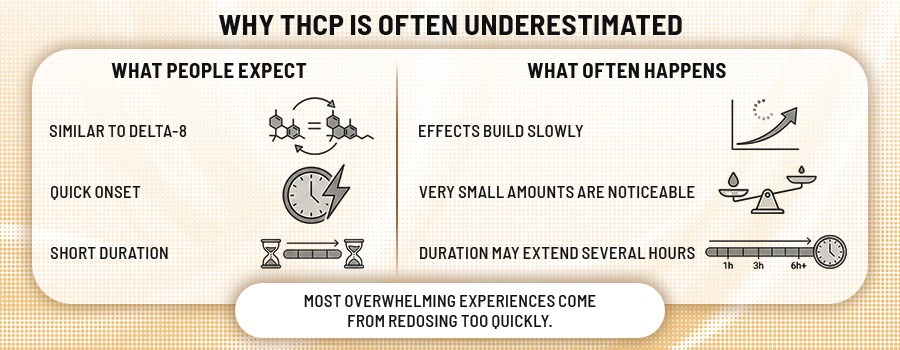
If you’ve searched THCp online, you’ve likely seen posts describing effects that last much longer than expected. Some mention experiences stretching close to eight hours.
This usually isn’t because THCp behaves unpredictably.
It’s because THCp is easy to underestimate.
Many users approach it like Delta-8 or standard THC. They take more before the first portion has settled. Then everything stacks at once.
Online forums reflect this pattern clearly. Most reports of uncomfortable experiences involve rushing, not the cannabinoid itself.
Why Testing Matters With Converted Cannabinoids
Because THCp is produced through conversion, testing becomes essential.
A proper lab report should confirm:
- THCp content
- absence of unwanted conversion byproducts
- overall cleanliness of the final product
During conversion, trace compounds can form if the process isn’t handled carefully. Those compounds shouldn’t remain in the finished product.
This is why third-party lab testing is one of the strongest trust signals with THCp.
Why Starting Amounts Matter More Than Labels Suggest
THCp packaging doesn’t always reflect how people actually respond.
You’ll see gummies recommending full servings right away. That’s often where people get into trouble.
Because THCp is potent, starting very low gives users time to understand how it affects them. Many experienced users recommend beginning well below what’s printed on the label, especially with edible formats.
This isn’t about being cautious for no reason. It’s about giving the body time to respond.
THCp Feels Different Depending on the Product Type
Another reason THCp gets misunderstood is the delivery method.
Different formats behave very differently:
- Gummies take longer to show up and tend to last longer
- Vapes are felt sooner and are easier to stop mid-session
- Concentrated formats feel heavier per small amount
Someone who feels fine using a THCp vape may have a very different experience with an edible at the same labeled strength.
That difference is about absorption, not inconsistency.
Why Sprayed Hemp Flower Raises Questions
Some THCp products involve spraying hemp flowers with THCp distillate.
This method can deliver THCp, but a lot of users have questions about it. The application isn’t always even, which can make the experience feel different from one time to the next.
It also doesn’t reflect how THCp appears naturally in the plant. Because of that, many users prefer formats where THCp is evenly formulated rather than applied afterward.
Where THCp Products Fit Today
As THCp has become more common, product formats have evolved.
One approach gaining traction is THCp diamond-based vapes, where THCp is formulated into a concentrated oil for more consistent delivery. This removes uneven application and makes portion control easier.
This is why some brands stick to more controlled formats. Habit’s THCp Diamond Disposable Vapes focus on hemp-derived THCp with testing and straightforward labels.
Final Thoughts
THCp sits in a space that confuses a lot of people.
It’s natural, but not extractable. Plant-derived, but processed. Strong, but often underestimated.
Once those pieces click, the conversation around THCp becomes much clearer.
Written by the Habit team, based on product research, market observation, and real customer behavior.
The real question isn’t whether THCp is synthetic. It’s whether people understand how it’s made, how it behaves, and how to approach it responsibly.
Frequently Asked Questions
Is THCa or THCp better?
Neither is better for everyone. THCa and THCp are used differently, and what works depends on experience and preference.
Why does THCp feel so strong?
Because small amounts tend to be noticeable. Most intense stories come from taking too much, too fast.
How are THCp products made?
Most start with hemp-derived CBD and are converted into THCp through a controlled process.
Is THCp beginner-friendly?
Usually no. It’s easier to underestimate, so it’s better suited for people with experience.
How should someone approach THCp?
Start with a very low dose and increase gradually. Taking it slow helps avoid most unwanted effects.