




Key Takeaways
- Sativa is often associated with energy, creativity, and daytime use.
- Indica is commonly associated with relaxation and slower-paced activities.
- THC percentage often matters more than whether a product is labeled Sativa or Indica.
- Terpenes play an important role in shaping the overall experience.
- Many modern cannabis strains are hybrids that combine traits from both categories.
- The best choice depends on your goals, tolerance, and preferred product type.
Most cannabis shoppers have heard the rule: Sativa for the day, Indica for the night.
It’s simple advice, and sometimes it works. But once you start exploring different products, you’ll quickly notice that cannabis isn’t always that predictable. Some Sativa strains can feel surprisingly mellow, while certain Indica products may not leave you feeling sleepy at all.
So what’s the real difference? Let’s take a closer look at how Sativa and Indica compare, how their effects may differ, and what actually matters when choosing flower, vapes, or edibles.
Sativa vs Indica at a Glance
| Feature | Sativa | Indica |
|---|---|---|
| Commonly Associated Effects | Uplifting, energetic | Relaxing, calming |
| Typical Use | Daytime | Evening |
| Mental Experience | Focused, creative | Calm, settled |
| Body Feel | Light and active | More body-focused |
| Flower Structure | Longer, airier buds | Dense, compact buds |
| Popular Products | Vapes, flower, gummies | Flower, gummies, vapes |
Sativa vs Indica: Key Differences
The simplest way to think about Sativa and Indica is that they’re often associated with different types of experiences.
Sativa strains are typically linked to energy, creativity, and social activities. Indica strains are more commonly associated with relaxation, comfort, and winding down.
However, the label alone doesn’t determine how a product will feel. A flower strain testing at 30% THC may feel much stronger than a strain testing at 15% THC, regardless of whether it’s labeled Sativa or Indica. Likewise, terpene profiles and cannabinoid content can significantly influence the overall experience.
That’s why many cannabis consumers use Sativa and Indica as a starting point rather than a guarantee.
How Does Sativa Usually Feel?
Sativa has earned a reputation as the more uplifting side of cannabis.
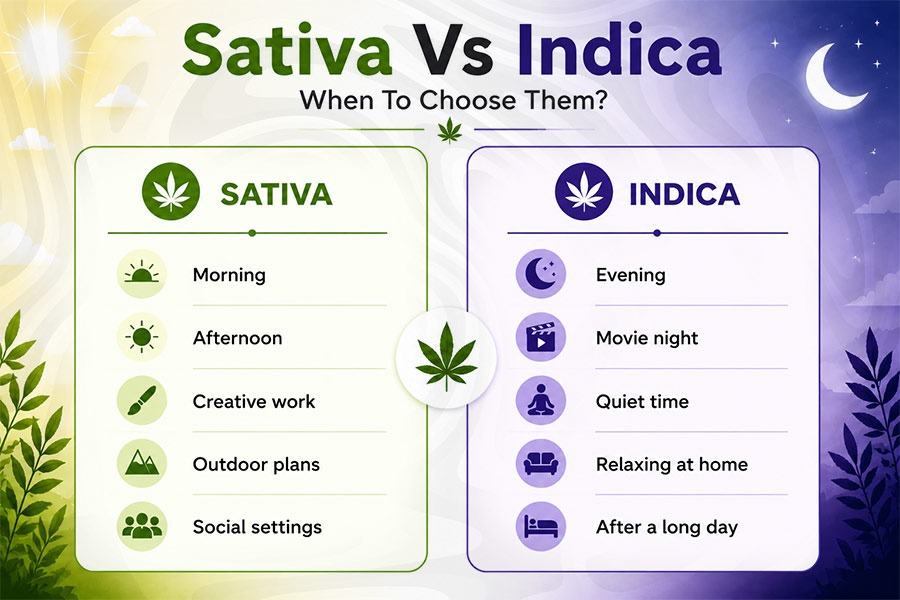
Many people choose Sativa products when they want to stay active, social, or engaged throughout the day. Whether it’s a creative project, an outdoor adventure, or a weekend gathering, Sativa strains are often associated with experiences that involve movement and interaction.
Effects Commonly Associated With Sativa
- Uplifting mood
- Increased motivation
- Creative thinking
- Social energy
- Mental stimulation
Keep in mind that effects vary from person to person. The same strain may feel different depending on your tolerance, dosage, and body chemistry.
Consumers who enjoy uplifting strain profiles often gravitate toward products like flower and Sativa Vapes because they offer a convenient way to enjoy cannabis during the day.
Looking for uplifting daytime strains? Explore our Sativa Vapes collection for convenient options commonly associated with energetic and social experiences.
How Does Indica Usually Feel?
If Sativa is often associated with staying active, Indica is typically linked to slowing things down.
Many cannabis shoppers reach for Indica products during quiet evenings, movie nights, or whenever they want to relax after a busy day.
Effects Commonly Associated With Indica
- Relaxation
- Calmness
- Physical comfort
- A slower pace
- A more body-focused experience
Like any cannabis product, effects can vary depending on THC content, cannabinoids, terpenes, and dosage.
For consumers looking to unwind after work or settle into a relaxing evening, Indica Vapes have become a popular choice thanks to their convenience and fast onset.
Prefer a slower-paced evening? Browse our Indica Vapes collection featuring strains many consumers choose when relaxing at home.
Indica vs Sativa Effects: Side-by-Side
While every strain is unique, here’s how consumers often compare the effects of indica vs sativa products.
| Category | Sativa | Indica |
|---|---|---|
| Mood | Upbeat | Calm |
| Energy | More energizing | More relaxing |
| Body Feel | Light and active | Body-focused |
| Best Time | Daytime | Evening |
| Social Activities | Often preferred | Less commonly chosen |
| Relaxation | Moderate | Often stronger |
Remember, these are general patterns rather than guarantees.
Popular Sativa and Indica Strains
If you’re new to cannabis, looking at popular strains can help make the Sativa vs Indica discussion feel more practical.
Well-Known Sativa Strains
Some commonly recognized Sativa strains include:
- Sour Diesel
- Jack Herer
- Durban Poison
- Green Crack
- Super Lemon Haze
These strains are often associated with uplifting and energetic experiences, although effects can vary from person to person.
Well-Known Indica Strains
Popular Indica strains include:
- Northern Lights
- Granddaddy Purple
- Bubba Kush
- Purple Kush
- Hindu Kush
These strains are commonly associated with relaxation and slower-paced experiences.
Popular Hybrid Strains
Many modern cannabis consumers prefer hybrids because they combine traits traditionally associated with both Sativa and Indica.
Popular hybrid strains include:
- Blue Dream
- Wedding Cake
- Gelato
- Gorilla Glue #4
- Runtz
Remember that strain names alone don’t guarantee a specific experience. THC content, terpene profiles, product format, and dosage can all influence how a product feels.
Sativa Bud vs Indica Bud: Can You Tell the Difference?
At first glance, Sativa and Indica flower can look noticeably different.
While appearance won’t tell you exactly how a strain will feel, it can provide clues about its genetics and growing characteristics.
| Feature | Sativa Bud | Indica Bud |
|---|---|---|
| Shape | Longer and narrower | Shorter and wider |
| Density | Airier structure | Dense and compact |
| Plant Height | Taller plants | Shorter plants |
| Leaf Shape | Thin leaves | Broad leaves |
| Common Appearance | Loose flower structure | Tight flower structure |
However, appearance only tells part of the story.
Two strains can look completely different yet produce similar experiences. Likewise, two strains that appear nearly identical may feel very different because of their cannabinoid and terpene profiles.
For example, a dense Indica flower testing at 15% THC may feel milder than a Sativa strain testing at 28% THC. This is one reason experienced consumers often pay attention to potency, cannabinoids, and terpene content rather than relying on appearance alone.
Want to see these differences for yourself? Browse the Habit THCA Flower collection to compare how various strains differ in appearance, aroma, terpene content, and overall character.
Sativa vs Indica Edibles: Do They Feel Different?
Edibles often raise a common question: Does the Sativa or Indica label matter?
The short answer is yes—but perhaps not as much as many people think.
Sativa gummies are often chosen for daytime activities, social situations, and creative experiences. Indica edibles are more commonly associated with relaxation and evening use.
Sativa Edibles vs Indica Edibles
| Feature | Sativa Edibles | Indica Edibles |
|---|---|---|
| Commonly Associated Effects | Uplifting and energizing | Relaxing and calming |
| Popular Use Time | Daytime | Evening |
| Typical Activities | Social events, creative projects, outdoor activities | Relaxing at home, movie nights, winding down |
| Duration | Similar | Similar |
| Onset Time | Similar | Similar |
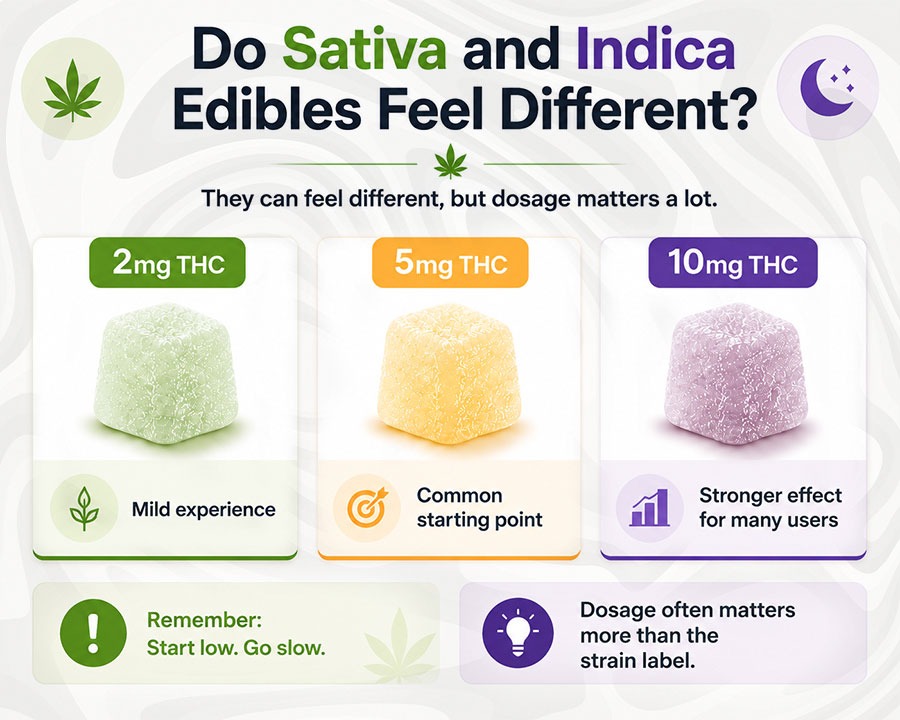
However, dosage often plays a bigger role than the label itself.
Consider These Examples
| THC Dose | What Many Consumers Expect |
|---|---|
| 2mg THC | Mild, beginner-friendly experience |
| 5mg THC | Common starting dose for many consumers |
| 10mg THC | Noticeably stronger effects, especially for newer users |
Most people will notice a bigger difference between 2mg and 10mg THC than they will between two gummies that contain the same amount of THC but carry different strain labels.
That’s why experienced consumers often look at THC content, cannabinoid ratios, and terpene profiles alongside the Sativa or Indica designation when choosing an edible.
What Matters More Than Sativa or Indica?
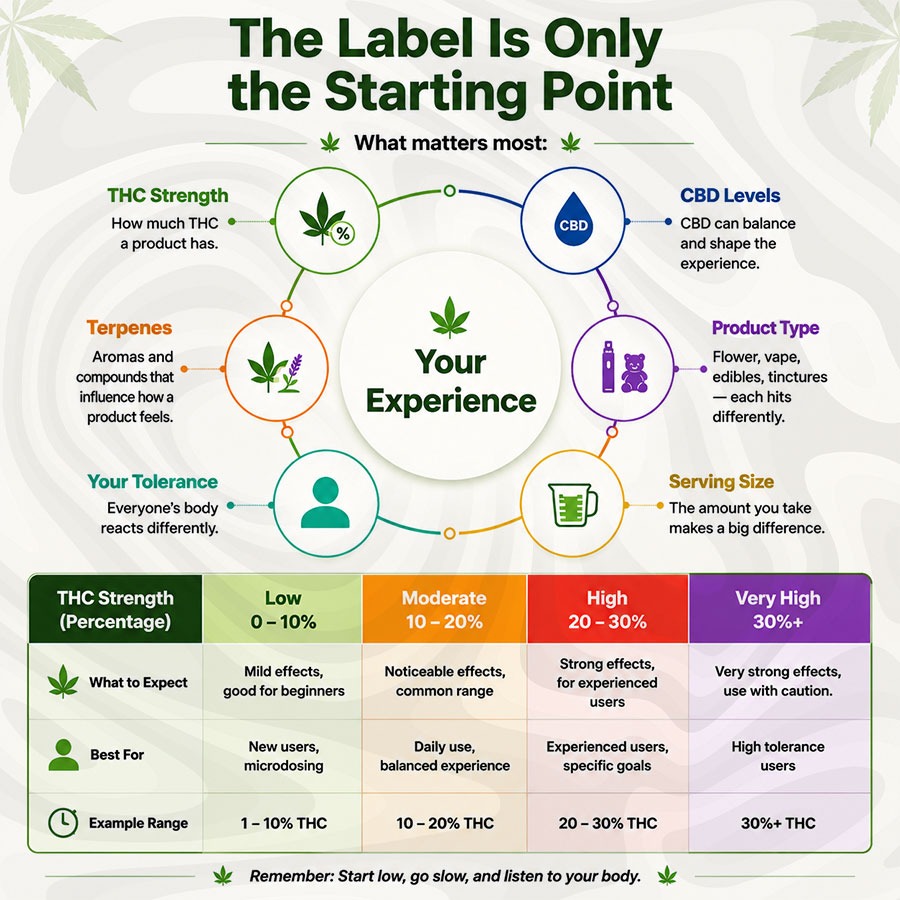
For years, cannabis consumers relied heavily on the Sativa vs Indica label. Today, many experienced users pay closer attention to the factors below.
THC Percentage
THC plays a major role in determining intensity.
For example:
- 10% THC flower may feel relatively mild.
- 20% THC flower often feels noticeably stronger.
- 30% THC flower may feel overwhelming for some consumers.
In our experience helping customers explore cannabis products, many first-time shoppers focus heavily on the Sativa or Indica label. Over time, most discover that THC strength, terpene profiles, and dosage often have a greater influence on the overall experience.
CBD Content
CBD can influence how a product feels.
For example, a balanced 1:1 THC-to-CBD product may produce a different experience than a product containing THC alone. Many consumers prefer these balanced formulations when looking for a gentler experience.
Terpenes
Terpenes are aromatic compounds found naturally in cannabis.
Popular examples include:
- Myrcene
- Limonene
- Pinene
- Caryophyllene
Many cannabis educators believe terpenes contribute significantly to a strain’s aroma, flavor, and overall experience.
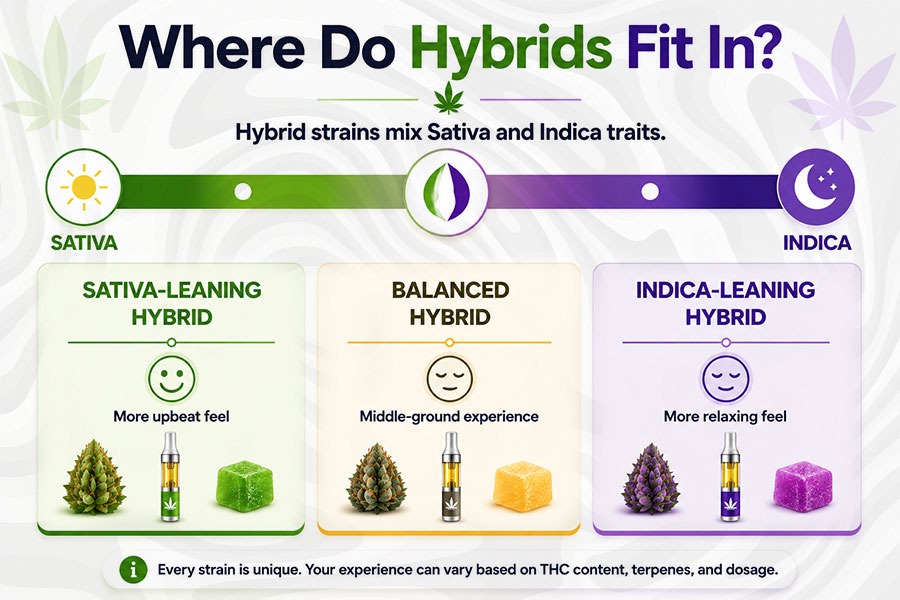
Where Do Hybrid Strains Fit In?
Not every cannabis product falls neatly into the Sativa or Indica category.
In fact, many of today’s most popular strains are hybrids. These strains combine genetics traditionally associated with both Sativa and Indica plants.
Some hybrids lean toward the uplifting qualities commonly linked to Sativa. Others lean toward the relaxing characteristics often associated with Indica.
Why Many Consumers Choose Hybrids
Many consumers choose hybrid strains because they offer a more balanced experience, making them a popular middle ground between the two categories.
Does Sativa vs Indica Still Matter Today?
Yes—but perhaps not in the way many people think.
Modern cannabis breeding has created thousands of unique strains. Researchers have identified more than 100 cannabinoids in cannabis, along with hundreds of aromatic compounds known as terpenes.
Many Experienced Consumers Focus On
- THC potency
- CBD content
- Terpene profiles
- Cannabinoid ratios
- Personal experience
Cannabis retailers and educators increasingly recommend looking beyond the Sativa or Indica label and paying closer attention to cannabinoid content, terpene profiles, and dosage.
Sativa and Indica remain useful starting points, but they shouldn’t be the only factors guiding your decision.
Final Thoughts
The Sativa vs Indica debate has been part of cannabis culture for decades, but modern cannabis is more nuanced than simple labels.
While Sativa is often associated with uplifting experiences and Indica is commonly linked to relaxation, factors like THC content, CBD levels, terpenes, and dosage can play an equally important role.
The best approach is to use Sativa and Indica as a guide, then pay attention to the details that matter most. Over time, you’ll develop a better understanding of which products fit your preferences, lifestyle, and goals.
Learn More About Cannabis
If you’d like to explore cannabis science in more detail, these educational resources provide additional information about cannabinoids, terpenes, and cannabis research:
- NCCIH Cannabis and Cannabinoids Research: National Center for Complementary and Integrative Health (NCCIH) Cannabis Research
- National Library of Medicine Cannabis Research Database: National Library of Medicine (PubMed) Cannabis Research
- Leafly Terpene Guide: Leafly Terpene Guide
Frequently Asked Questions
About the Author
Enigmatic Eve
Enigmatic Eve is a cannabis enthusiast, researcher, and writer with more than 7 years of experience covering hemp-derived cannabinoids, cannabis vapes, edibles, and emerging industry trends. She specializes in simplifying complex topics such as THCA, Delta 9 THC, live rosin, terpenes, and cannabis strains for everyday consumers. As a contributor to HabitCBD, Eve combines industry research with practical insights to create clear, educational content that helps readers make informed decisions about hemp-derived products.